
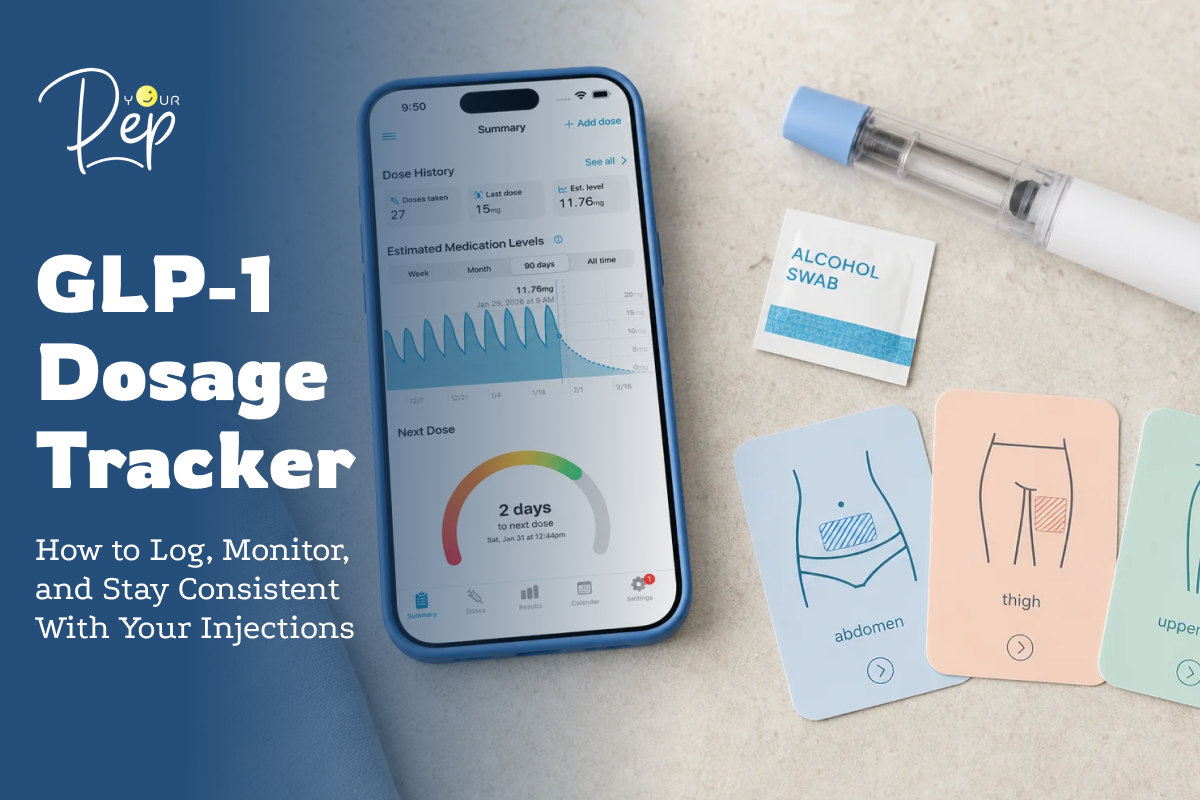
Starting GLP-1 therapy comes with a learning curve, and one of the biggest challenges patients report isn’t the injection itself — it’s remembering everything around it. A GLP-1 dosage tracker solves that problem by giving you one place to log doses, injection sites, side effects, and progress instead of relying on scattered notes, sticky pads, or memory alone. Whether you’re managing type 2 diabetes or using GLP-1 medication for weight management, consistent tracking is what turns a prescription into a repeatable, safe routine you can actually stick to.
This guide breaks down why dosage tracking matters, exactly what to log, how a tracking app like YourPep simplifies the process, and how to choose one that fits your routine.
What Is a GLP-1 Dosage Tracker and Why It Matters
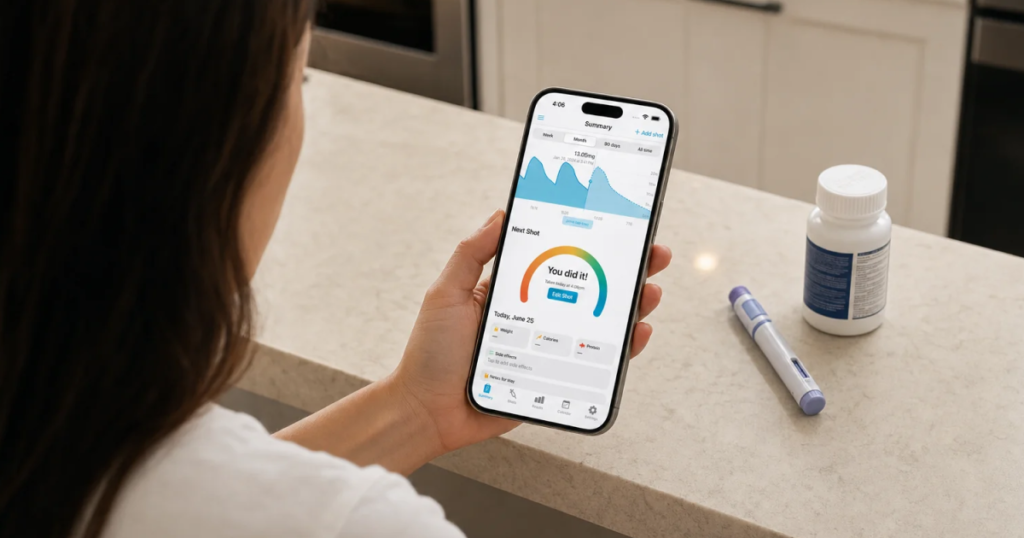
GLP-1 (Glucagon-Like Peptide-1) is a naturally occurring hormone that helps regulate blood sugar, appetite, and digestion. GLP-1 injections mimic this hormone, supporting your body in controlling glucose levels and promoting weight management. Because these medications are typically administered weekly or according to a titration schedule set by your provider, timing and dose accuracy matter more than they do with many other medications.
A GLP-1 dosage tracker is a system — usually a mobile app — built specifically to record every dose you take, when you took it, where you injected, and how your body responded afterward. Instead of trying to recall whether last Tuesday’s dose was 0.5 mg or 1 mg, or whether you rotated your injection site, everything is logged in one place you can review or share.
This matters for three practical reasons:
- Dosing accuracy. Titration schedules often increase gradually over weeks or months, and a missed or doubled dose can affect both safety and results.
- Pattern recognition. Side effects, appetite changes, and energy levels often follow patterns that are only visible when you look at data over time, not day to day.
- Provider communication. Your care team can make better adjustments to your plan when they have accurate, dated records instead of your best recollection during a short appointment.
Why Manual Tracking Falls Short
Many people start GLP-1 therapy with good intentions — a notes app entry here, a calendar reminder there. In practice, this approach tends to break down for a few reasons.
First, manual notes are inconsistent. A quick text entry after a busy day rarely captures useful detail like injection site rotation or symptom severity. Second, there’s no single view of trends. Scrolling through weeks of scattered notes to spot a pattern in nausea or fatigue is tedious enough that most people simply stop trying. Third, sharing this information with a healthcare provider means either handing over a messy notes app or trying to reconstruct weeks of history from memory during a rushed appointment.
None of this is a failure of discipline — it’s a structure problem. A dedicated GLP-1 dosage tracker removes the friction by building the right fields, reminders, and reports into the process from the start.
What to Track: The Essential Data Points
Not all tracking is equally useful. Focused, consistent logging beats sporadic detail every time. Here’s what actually matters.
Dose Amount and Injection Site
Record the exact dose taken and where you injected it (abdomen, thigh, or upper arm). Rotating injection sites reduces irritation and helps your provider spot patterns if you experience localized reactions.
Timing and Schedule
Log the date and time of each dose. Because most GLP-1 medications follow a weekly schedule, even a day or two of drift can compound over a titration period. A tracker that lets you schedule your dose day and time in advance — with reminders — keeps this consistent without relying on memory.
Side Effects and Symptoms
Mild side effects like nausea or digestive changes are common, especially during the first few weeks or after a dose increase, and they often lessen over time. Logging symptoms daily — including severity and how long they lasted — helps you and your provider distinguish between a normal adjustment period and something that needs a change in plan.
Weight, Appetite, and Energy Trends
Beyond the injection itself, tracking your weight, appetite level, mood, and energy gives a fuller picture of how the therapy is working. These fields turn a dosage log into a genuine health record rather than a simple checklist.
How the YourPep App Tracks Your GLP-1 Journey
A well-designed tracker app centers on a few core workflows that mirror how patients actually use GLP-1 medication day to day. Here’s how YourPep handles each one.
Logging Daily Doses
In YourPep, you can log daily doses, mood, and side effects directly after each injection, with the ability to pick specific symptoms to track rather than typing free-form notes every time. This structured approach makes entries faster and more consistent, which means you’re more likely to actually keep it up.
Scheduling Reminders
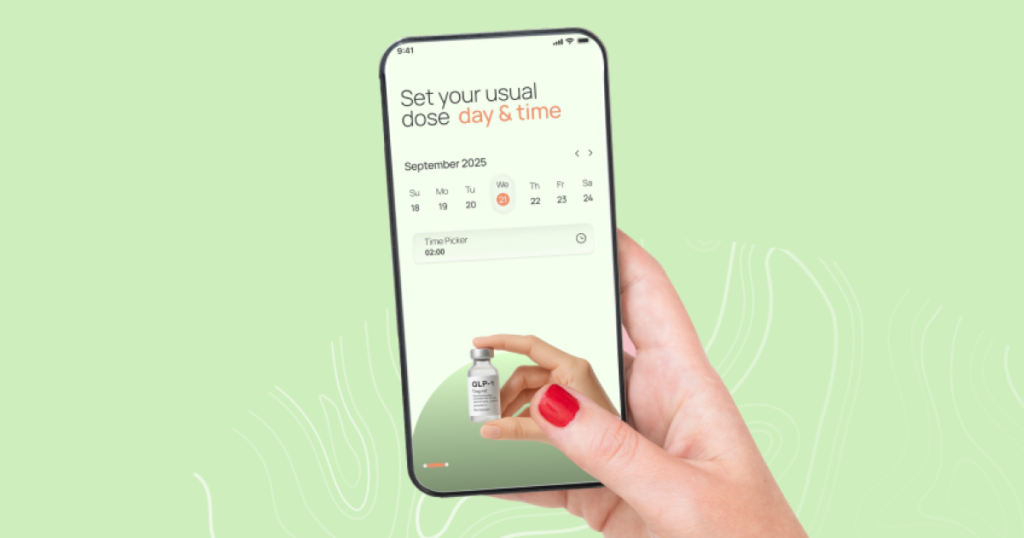
Because titration schedules are date-sensitive, YourPep lets you schedule your dose day and time in advance, removing the guesswork. A reminder that fires on the right day, at the right time, prevents both missed doses and accidental early re-dosing.
Sharing Reports With Your Provider
Perhaps the most underused feature of a dosage tracker is reporting. Rather than describing symptoms from memory during an appointment, YourPep lets you track progress and share reports that show exact dates, doses, and symptom patterns — giving your provider the information they need to fine-tune your plan.
Benefits of Using a Dedicated Tracking App
The case for using a GLP-1 dosage tracker app instead of a general notes app comes down to a few concrete advantages.
- Consistency. Structured fields mean you log the same details every time, which makes the data actually usable later.
- Visibility into trends. Seeing appetite, energy, and side effect data laid out over weeks makes it far easier to spot what’s working and what isn’t.
- Goal tracking. Many apps let you set your goals — weight, appetite, and energy targets — so you can measure progress against something concrete rather than vague impressions.
- Reduced appointment friction. Providers can review a clear history in minutes instead of reconstructing one from a patient’s memory.
- Accountability. A visible log and reminder system supports the routine that GLP-1 therapy depends on, especially during the early weeks when the schedule is new.
Common Challenges and How Tracking Helps You Manage Them
GLP-1 therapy isn’t a shortcut — it’s a supportive tool that works best alongside healthy habits and consistent follow-through. That means challenges are part of the process, and tracking is one of the most effective ways to manage them.
Nausea and digestive changes are the most commonly reported issues, particularly after starting therapy or increasing a dose. These are usually temporary as the body adjusts, but knowing whether a symptom is new, worsening, or already improving requires a record to compare against — not just a general sense of “I’ve felt off lately.”
Fatigue and injection site irritation are also common and typically resolve with time and site rotation. Logging where you injected each week makes it easy to confirm you’re rotating properly and to flag a site that seems more prone to irritation.
Plateaus or slower-than-expected progress can be frustrating, but a tracker that logs weight, appetite, and dose history side by side gives you and your provider real data to work from, rather than guesswork, when deciding whether an adjustment is needed.
The consistent message across all of these challenges: side effects and slow progress don’t mean the therapy isn’t working. With proper guidance, accurate tracking, and care, most challenges can be managed as part of a normal adjustment period.
Choosing the Right GLP-1 Dosage Tracker
Not every tracking app is built with GLP-1 therapy in mind. When evaluating options, a few features separate a genuinely useful tracker from a generic health app.
Look for:
- Dose and injection site logging built specifically for GLP-1 schedules, not just generic medication reminders
- The ability to pick and monitor specific symptoms over time, rather than a single open text field
- Scheduling tools that let you set your dose day and time in advance
- Progress reports you can share directly with your provider
- Goal-setting for weight, appetite, and energy not just a scale number
- Availability on both iOS and Android, so the app fits your device without compromise
Apps like YourPep are built around this exact workflow: you can download the app on iOS or Android, log daily doses, mood, and side effects, pick symptoms to track, schedule your dose day and time, and set goals around weight, appetite, and energy all in one place designed specifically for GLP-1 users. Recent updates have expanded this further, with meal tracking and water tracking now built directly into the app, giving users a more complete picture of the lifestyle factors that influence how GLP-1 therapy performs alongside diet and hydration.
Best Practices for Consistent Tracking
A tracker only works if it becomes a habit. A few practices make that easier:
- Log immediately after each injection, while the details are fresh, rather than trying to remember them later.
- Set your reminder for the same day and time each week so dosing becomes routine rather than something you have to remember unprompted.
- Rotate and record injection sites every time, not just when irritation occurs.
- Review your trends monthly, not just before appointments, so you notice patterns early.
- Bring your report to every provider visit, even if nothing seems unusual consistent data helps confirm the plan is working, not just flag when it isn’t.
Conclusion
A GLP-1 dosage tracker turns an easy-to-forget routine into a structured, reviewable record covering your dose, injection site, timing, symptoms, and progress in one place instead of scattered across notes and memory. That structure is what makes it possible to catch patterns early, have more productive provider conversations, and stay consistent through a therapy that depends on consistency to work. If you’re currently managing GLP-1 injections with sticky notes or a general notes app, moving to a dedicated tracker — like the YourPep app, with its dose logging, symptom picker, scheduling, and new meal and water tracking features — is one of the simplest changes you can make to stay on top of your therapy. Download it on iOS or Android and start logging your next dose.
Frequently Asked Questions
What is a GLP-1 dosage tracker used for?
A GLP-1 dosage tracker is used to log the amount, timing, and injection site of each GLP-1 dose, along with related symptoms, mood, and progress data. It helps patients stay consistent with their schedule and gives providers accurate information to guide treatment adjustments.
How often should I log my GLP-1 injections?
You should log every injection at the time you take it, including the dose amount, site, and date. Logging immediately, rather than after the fact, keeps the record accurate and makes it easier to spot patterns in side effects or progress over time.
Can a dosage tracker help with GLP-1 side effects?
Yes. Tracking side effects like nausea, digestive changes, or fatigue over time helps distinguish normal, temporary adjustment symptoms from patterns worth discussing with your provider, since most side effects lessen as the body adapts to the medication.
Is a GLP-1 tracker app necessary, or can I use a regular notes app?
A regular notes app can technically work, but it lacks structured fields for dose, injection site, symptoms, and scheduling, which makes trends harder to spot and reports harder to share. A dedicated tracker like YourPep is built specifically around the GLP-1 routine.
What should I track besides my dose?
Beyond dose amount and timing, track your injection site, side effects, mood, appetite, energy levels, and weight. Together, these give a fuller picture of how your body is responding to therapy, not just whether you took the medication on schedule.