
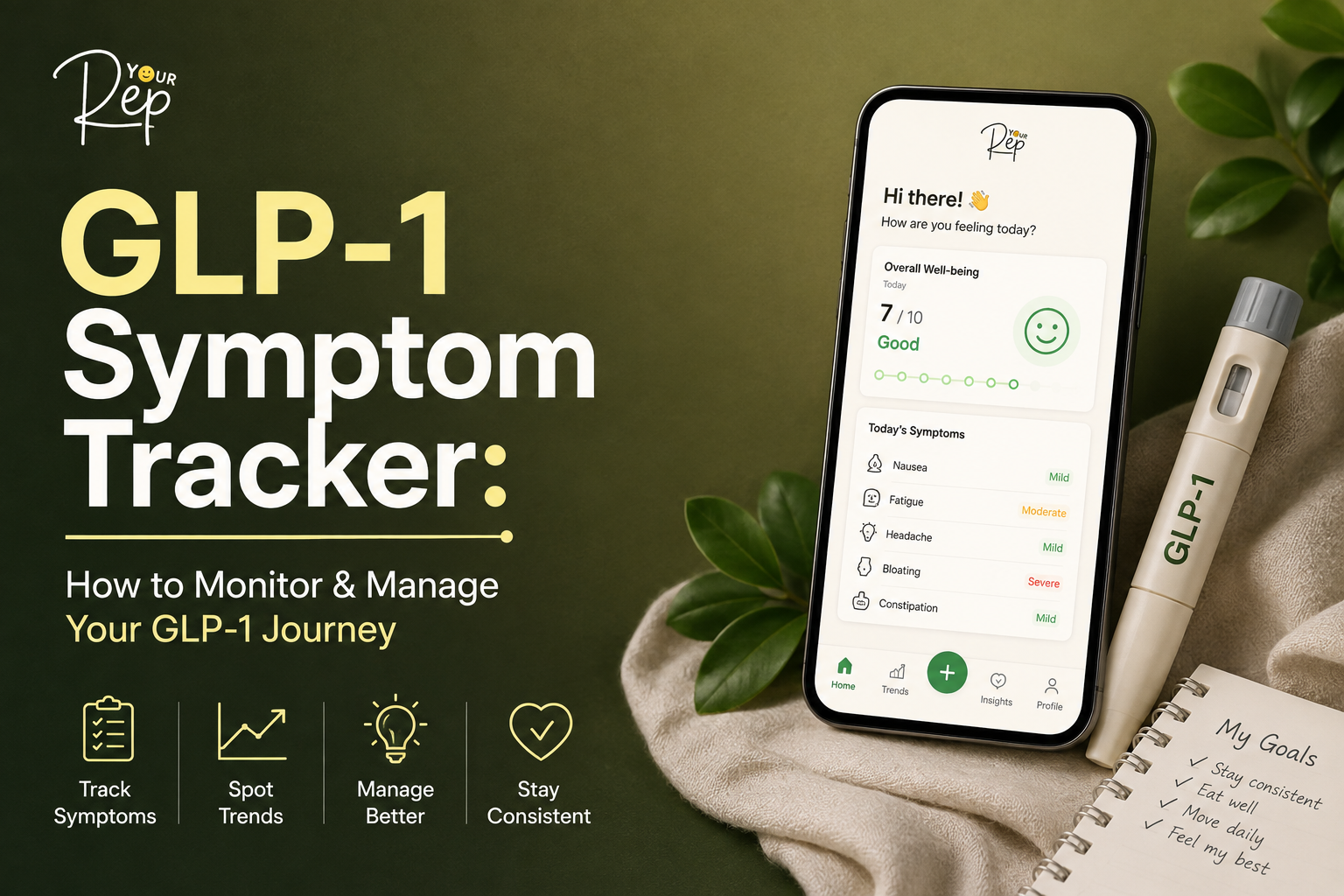
Discover how a GLP-1 symptom tracker can help you manage side effects, stay consistent, and get the most from your GLP-1 medication. Your complete guide to tracking smarter.
Table of Contents
• 1. Introduction
• 2. What Is a GLP-1 and Why Are So Many People Using It?
• 3. The Problem: Why Most GLP-1 Users Struggle Without a Tracker
• 4. Key Information: What a GLP-1 Symptom Tracker Should Do
• 5. How YourPep Supports Your GLP-1 Journey
• 6. Real-World Case Study: The Difference Tracking Makes
• 7. Comparison: Tracking Methods for GLP-1 Users
• 8. Statistics: The GLP-1 Landscape at a Glance
• 9. Explore More on YourPep
• 10. Frequently Asked Questions About GLP-1 Symptom Tracking
• 11. Conclusion
• 12. Disclaimer
Introduction
Millions of people around the world are now using GLP-1 medications — from semaglutide to tirzepatide — to manage blood sugar, support weight loss, and improve metabolic health. These medications have transformed how healthcare approaches type 2 diabetes and obesity. But here is the thing most people don’t talk about: how you experience GLP-1 therapy matters just as much as the medication itself.
That is where a GLP-1 symptom tracker becomes essential.
Whether you are in your first week of injections or several months into your journey, a dedicated GLP-1 symptom tracker gives you the power to understand your body’s patterns, communicate more clearly with your healthcare provider, and stay on track when things feel uncertain. This guide covers everything you need to know — from why tracking matters to what symptoms to log, how real users have benefited, and how to choose the right tool for your journey.
What Is a GLP-1 and Why Are So Many People Using It?
GLP-1, or Glucagon-Like Peptide-1, is a hormone naturally produced in the gut. It plays a key role in regulating blood sugar after meals, signaling fullness to the brain, and slowing digestion. GLP-1 receptor agonist medications mimic this hormone, making them effective for people managing type 2 diabetes and, increasingly, for weight management.
Common GLP-1 medications include semaglutide (Ozempic, Wegovy), tirzepatide (Mounjaro, Zepbound), dulaglutide (Trulicity), and liraglutide (Victoza, Saxenda), among others. These are typically taken as weekly or daily injections, though oral forms exist.
GLP-1 therapy has seen explosive adoption globally. The GLP-1 drugs market is projected to grow from approximately USD 52.95 billion in 2025 to USD 132.79 billion by 2035, reflecting a compound annual growth rate of 9.63%. In 2024 alone, more than one in four adults with diagnosed diabetes were using GLP-1 injectables — that is 26.5% of this population, according to data from the US National Health Interview Survey.
As use grows, so does the need for better self-management tools — and that is exactly what a GLP-1 symptom tracker is built to provide.
The Problem: Why Most GLP-1 Users Struggle Without a Tracker
Starting Is Easy. Staying Is Hard.
One of the biggest challenges with GLP-1 therapy is not starting it — it is staying on it long enough to see meaningful results. Research shows that only 63% of patients who began GLP-1 medications in early 2024 remained on therapy after one year, and persistence drops further over time, with only 14% remaining on Wegovy after three years.
Why do so many people stop? Unmanaged side effects are a leading reason.
Side Effects Are Common and Poorly Tracked
GLP-1 medications slow gastric emptying, increase feelings of fullness, and act on appetite-regulating centres in the brain. These mechanisms are what make the medications work — but they also produce side effects, especially during the early weeks of treatment or after a dose increase.
In a large-scale analysis of self-reported experiences from GLP-1 users, gastrointestinal symptoms predominated. Nausea was reported by 36.9% of users, followed by fatigue (16.7%), vomiting (16.3%), constipation (15.3%), and diarrhoea (12.6%). Beyond GI symptoms, users also reported headaches, dizziness, injection site reactions, increased heart rate, and mood-related changes.
The challenge is that most people experience these symptoms without any structured way to track when they occur, how severe they are, how long they last, or what triggers them. Without that data, it becomes very difficult to distinguish a normal adjustment response from a warning sign that requires medical attention.
Most Symptoms Are Manageable — But Only If You Know What Is Happening
The good news: most GLP-1 side effects are temporary and improve as the body adjusts. Nausea is typically most intense within 24–72 hours of an injection and usually eases by the end of the month. Fatigue often relates to reduced calorie intake. Headaches typically resolve within a few weeks.
But ‘most symptoms improve over time’ is only reassuring if you are actually monitoring whether yours are improving. That is the gap a GLP-1 symptom tracker fills.
Key Information: What a GLP-1 Symptom Tracker Should Do
A good GLP-1 symptom tracker is more than a digital diary. It is a structured system that helps you and your healthcare provider understand your response to the medication over time. Here is what it should cover:
Symptoms to Track Daily
• Nausea: Timing, severity (1–10 scale), duration, potential triggers
• Digestive symptoms: Bloating, constipation, diarrhoea, heartburn, reflux, abdominal pain
• Energy levels: Fatigue, general wellbeing, ability to complete daily tasks
• Appetite: Hunger levels, portion sizes, food aversions
• Headache and dizziness: Frequency, intensity, time of day
• Injection site reactions: Redness, swelling, itching
• Mood and mental clarity: Anxiety, low mood, brain fog
• Hydration levels: Fluid intake tracking, especially important as reduced appetite can lower fluid intake
Metrics to Log Weekly
• Body weight (same time, same conditions)
• Blood glucose (for users managing diabetes)
• Dose date and amount
• Any missed or delayed injections
Contextual Notes That Improve Insight
• What you ate before and after the injection
• Physical activity level
• Sleep quality
• Stress levels
When all of this is logged consistently, patterns emerge. You might notice that nausea spikes when you eat fatty foods on injection day, or that fatigue is worse in weeks you under-hydrate. These insights cannot come from memory alone — they require a tracker.
How YourPep Supports Your GLP-1 Journey
Tracking symptoms manually — in a notebook, on a spreadsheet, or in a generic health app — works, but it requires significant effort and rarely surfaces the insights that matter most. YourPep is purpose-built for people on their GLP-1 journey. It removes the friction from daily logging and puts the right information in front of you — and your provider — at the right time.
Daily Wellbeing Check-In
Every day, YourPep opens with a simple, intuitive check-in: How are you feeling today? From a single screen, you can log your current overall wellbeing — choosing from options like Good or Okay — alongside any specific symptoms you are experiencing. The tracked symptoms include:
• Nausea
• Headache
• Dizziness
• Reflux
• Constipation
• Fatigue
This structured daily check-in takes under a minute and builds a longitudinal symptom record that is far more useful than trying to remember how you felt three weeks ago when you speak with your doctor.
Weight & Goal Tracking
YourPep keeps your weight journey visible at a glance. The dashboard shows your goal weight, your total weight lost since starting, and your last login weight — giving you an immediate sense of progress without having to dig through old records. Weight entries are timestamped so you and your provider can correlate changes with dose adjustments or lifestyle shifts.
Dose Management
One of the most practically useful features in YourPep is its dose tracking module. The app records your last dose date and automatically calculates and displays when your next dose is due. Paired with customisable notification reminders for dose time, this means you are far less likely to miss an injection or accidentally double-dose — both common issues that can disrupt your treatment progress.
Weekly Plan
YourPep includes a weekly plan view that helps you stay organised across the full arc of your treatment week. Rather than tracking one day at a time in isolation, the weekly view lets you see your symptom patterns, dose schedule, and wellbeing scores in context — making it easier to identify whether a rough day is a one-off or part of a recurring trend.
Appointment Management
Managing your healthcare schedule is built directly into the platform. YourPep lets you log your last appointment date and track your next appointment, so your medical visits stay connected to your tracking data. When you arrive at an appointment with a complete symptom log and weight history, your provider has everything they need to make informed decisions about your care.
Subscription & Notifications
YourPep offers subscription access that unlocks the full suite of tracking and management features. Notification settings allow you to set personalised reminders for dose times and check-ins, so the app works around your schedule rather than the other way around.
Whether you are just starting out or optimising an ongoing treatment plan, YourPep brings structure, insight, and peace of mind to your GLP-1 journey. Visit YourPep to learn more.
Real-World Case Study: The Difference Tracking Makes
Meet Sarah and James: Same Medication, Different Outcomes
Sarah and James both started semaglutide within the same week in January 2024. Both were in their early forties, both had been managing type 2 diabetes for several years, and both were prescribed the same starting dose. They had similar health profiles and similar goals. But twelve weeks later, their experiences were strikingly different.
Sarah: The Untracked Experience
Sarah relied on memory and occasional notes in her phone to keep track of how she was feeling. In weeks one and two, she experienced significant nausea and low energy. Unsure whether this was normal, she began eating even less to avoid triggering symptoms — inadvertently compounding her fatigue through inadequate nutrition.
When she attended her six-week follow-up appointment, she struggled to describe what had happened. She remembered feeling unwell but could not say precisely when symptoms peaked, how long nausea lasted each day, or whether it was getting better or worse. Her provider, working without data, advised her to ‘give it more time’ and made no changes to her plan.
By week twelve, Sarah was seriously considering stopping the medication. The nausea felt unpredictable and exhausting. Without evidence that things were improving, it was hard to stay motivated.
James: The Tracked Experience
James started using YourPep from day one, logging his daily check-in each morning before breakfast. He rated his nausea, energy levels, and general wellbeing, and noted what he had eaten the evening before injections.
By week three, a pattern was already visible in his data. Nausea consistently peaked on injection day and the following morning, and it correlated with higher-fat meals the night before. His fatigue scores, meanwhile, were trending downward week on week — evidence that his body was adjusting, even when individual days felt hard.
At his six-week appointment, James opened YourPep and walked his provider through three weeks of logged data. The pattern was immediately clear. His provider suggested shifting his injection to Friday evenings and having a lighter, low-fat meal beforehand. James’s dose notification reminder was updated accordingly.
By week twelve, James reported that nausea had become manageable and largely predictable. He had lost 4.2 kg — consistent with early-stage results on semaglutide — and felt confident continuing therapy.
What Made the Difference
• James’s tracking revealed a specific, actionable trigger (high-fat meals before injection) that no one would have identified from memory alone
• The weekly trend data showed improvement was happening even when individual days were difficult — preventing early discontinuation
• His provider could make a precise, evidence-based recommendation rather than a general suggestion to ‘wait and see’
• The dose reminder feature ensured James never missed or delayed an injection, maintaining therapeutic consistency throughout
The medication was the same. The outcome was different — because one person had data and the other did not.
Comparison: Tracking Methods for GLP-1 Users
Not all tracking methods are created equal. Here is how the main options compare for GLP-1 users:
| Method | Pros | Cons | Best For |
| Paper diary | Simple, no technology needed | Hard to review patterns, easily lost | Very casual logging |
| Generic notes app | Convenient, always available | Unstructured, no analysis possible | Basic note-takers |
| Generic health app | Some structure built in | Not GLP-1 specific, limited insight | General wellness tracking |
| Spreadsheet | Flexible, visual if set up well | Time-consuming, requires manual setup | Data-savvy users |
| YourPep (dedicated GLP-1 tracker) | Structured, pattern recognition, dose reminders, appointment tracking, shareable with provider | Requires consistent daily use | Serious GLP-1 users wanting results |
A dedicated GLP-1 symptom tracker wins not because it is the easiest to start, but because it is built for the specific data points that matter in GLP-1 therapy. It reduces the friction of logging and increases the value of what is captured.
Statistics: The GLP-1 Landscape at a Glance
Understanding where GLP-1 therapy stands today helps contextualise why proper symptom tracking is so important at a population level:
| Statistic | Data Point |
| GLP-1 market size (2025) | USD 52.95 billion |
| GLP-1 market forecast (2035) | USD 132.79 billion |
| Adults with diabetes using GLP-1 (2024) | 26.5% (NCHS/CDC) |
| 1-year persistence on therapy (2024 cohort) | 63% |
| 3-year persistence on Wegovy | 14% |
| Nausea prevalence in GLP-1 users | Up to 36.9% |
| Avg weight loss (semaglutide, 1 year) | 7.7% of body weight |
| Avg weight loss (tirzepatide, 1 year) | 12.4% of body weight |
These numbers tell a clear story: GLP-1 medications work, but long-term adherence — and therefore long-term results — depends on how well side effects are managed. Tracking is one of the most direct ways to improve that management.
Explore More on YourPep
If you found this guide helpful, here are areas worth exploring further on YourPep:
• How to set up your personal health tracking routine
• Understanding your body’s response to dose changes
• Building habits that support GLP-1 success
• Connecting your lifestyle data to your medication journey
Frequently Asked Questions About GLP-1 Symptom Tracking
Q: When should I start using a GLP-1 symptom tracker?
The best time to start is on day one — before your first injection if possible. Baseline data from week one helps your provider understand how your body is responding and gives you something to compare against as therapy progresses.
Q: Which symptoms are normal and which require urgent attention?
Mild nausea, fatigue, reduced appetite, dizziness, and temporary digestive changes are considered part of the normal adjustment phase and typically improve within three to six weeks. However, severe abdominal pain, persistent vomiting leading to dehydration, signs of pancreatitis (severe pain radiating to the back), or significant vision changes should be reported to your healthcare provider promptly.
Q: How detailed does my symptom log need to be?
Start with the basics: injection date, main symptoms, severity on a 1–10 scale, and anything notable about your meals or activity that day. Even simple, consistent logging is far more valuable than detailed but sporadic entries.
Q: Can I share my GLP-1 symptom tracker data with my doctor?
Yes — and you should. Consistent symptom data allows your provider to make more informed decisions about dose adjustments, timing, and any additional interventions. Many people find that having this data makes appointments significantly more productive.
Q: Does tracking symptoms help with weight loss results?
Indirectly, yes. Tracking helps you stay on therapy longer by managing side effects, and persistence is directly linked to better outcomes. One real-world study found that weight loss results nearly doubled for people who stayed on therapy for a full year compared to those who discontinued early.
Q: How long do GLP-1 side effects typically last?
Most GLP-1 side effects are most intense in the first two to four weeks, particularly around dose initiation or increases. Nausea often improves significantly by weeks three to six. However, individual responses vary based on genetics, current health status, dose, and lifestyle factors.
Q: Is a GLP-1 symptom tracker useful even if I feel fine?
Absolutely. Tracking when you feel well establishes your personal baseline, which makes it much easier to notice changes when they occur. It also confirms that your current approach — your diet, hydration, meal timing, and dose schedule — is working, which is valuable information in itself.
Conclusion
GLP-1 medications are genuinely transforming how people manage blood sugar and weight around the world. But transformation takes time, consistency, and informed decisions along the way.
A GLP-1 symptom tracker is not just a convenience — it is a tool that bridges the gap between how a medication performs in a clinical trial and how it works in your real life. It gives you and your healthcare provider the data needed to adjust, optimise, and stay committed to a treatment that could meaningfully improve your health.
The people seeing the best long-term results from GLP-1 therapy are not necessarily those who experience the fewest side effects. They are the ones who understand their body’s signals, communicate those signals clearly, and make evidence-based adjustments. Tracking makes that possible.
Start logging from day one. Be consistent. Review your data. And use the insights to build a GLP-1 journey that works — not just on paper, but for your life.
Get started with YourPep today →
Disclaimer
This blog post is intended for general informational and educational purposes only. It does not constitute medical advice, diagnosis, or treatment. GLP-1 medications are prescription drugs that should only be used under the guidance and supervision of a qualified healthcare professional. The information in this article is not a substitute for professional medical advice. Always consult your doctor, pharmacist, or qualified health provider with any questions you may have regarding a medical condition or treatment plan. Never disregard professional medical advice or delay seeking it because of something you have read here. Individual responses to GLP-1 medications vary. Side effect profiles, weight loss outcomes, and suitability differ from person to person. Statistics cited in this article are drawn from published research and public health sources and are intended for illustrative context only.