

If you’ve ever stood in front of your refrigerator asking yourself “did I already take this week’s shot?” — you’re not alone. Learning how to track your GLP-1 dosage schedule is one of the most overlooked parts of starting GLP-1 therapy, yet it’s often the difference between steady progress and a frustrating plateau. Missed doses, double doses, and forgotten injection sites are common early mistakes, and they can throw off both your results and how your body responds to treatment.
GLP-1 (Glucagon-Like Peptide-1) is a naturally occurring hormone that helps regulate blood sugar, appetite, and digestion. GLP-1 injections mimic this hormone, giving your body extra support in controlling glucose levels and managing weight. But that support only works if the dosing stays consistent — which means tracking isn’t optional, it’s part of the treatment itself.
This guide walks through why dosage tracking matters, the most reliable methods for staying on schedule, common mistakes to avoid, and how a purpose-built app can take the guesswork out of the process entirely.
Why Tracking Your GLP-1 Dosage Schedule Matters
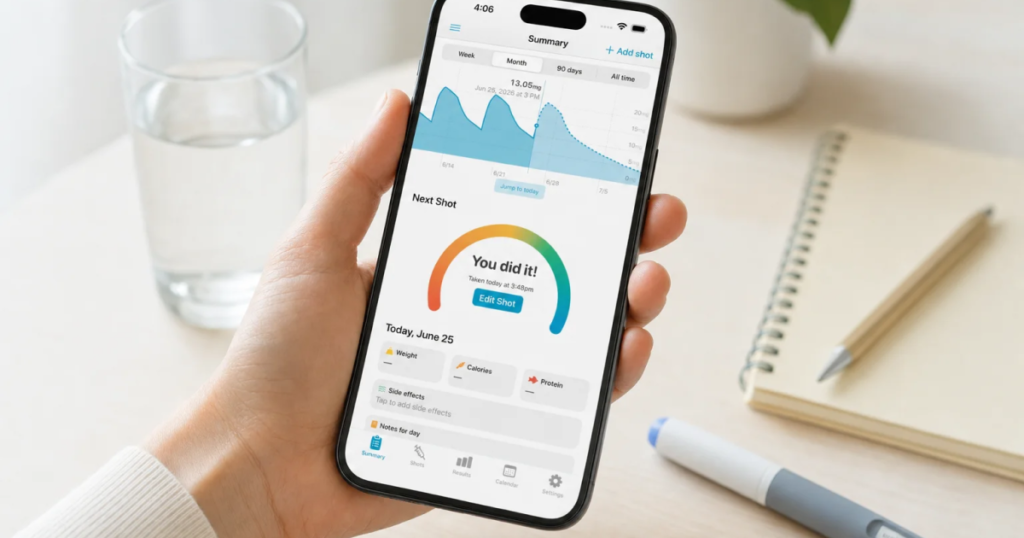
GLP-1 medications work on a weekly or daily rhythm, depending on the specific treatment plan your provider prescribes. Unlike a daily vitamin, missing or shifting a dose by even a day or two can affect how your body responds — some people notice more nausea when a dose is delayed and then “caught up,” while others see appetite control taper off toward the end of a dosing window.
Consistency does three things for GLP-1 therapy:
- Keeps hormone levels steady, which is what allows appetite and blood sugar regulation to work as intended.
- Reduces side effect spikes that often happen when doses are taken too close together or too far apart.
- Gives you and your provider clean data to evaluate whether the treatment is working or needs adjustment.
A 2023 review in Diabetes, Obesity and Metabolism found that medication adherence is one of the strongest predictors of long-term outcomes in GLP-1 therapy, more so than starting dose or initial body weight. In plain terms: how well you stick to the schedule matters as much as the medication itself.
Common Dosage Tracking Mistakes
Most tracking problems aren’t about discipline — they’re about relying on memory or scattered notes. The most frequent issues include:
Relying on memory alone. After a few weeks, injection days blur together, especially if your schedule shifts around holidays, travel, or a busy week at work.
Using a paper calendar that doesn’t travel with you. A sticky note on the fridge works until you’re not home on injection day.
Not logging injection sites. Rotating between the abdomen, thigh, and upper arm helps prevent irritation and scar tissue, but it’s nearly impossible to track by memory over months.
Ignoring side effect patterns. Without a log, it’s hard to tell your provider whether nausea is tied to timing, dose increases, or something else entirely.
No backup reminder system. A single alarm is easy to miss or dismiss on a hectic day.
Methods for Tracking Your GLP-1 Dosage Schedule
There isn’t one “correct” way to track doses — the right method is the one you’ll actually stick with. Here are the most common approaches, ranked from least to most reliable.
1. Paper Logs and Wall Calendars
A printed calendar is better than nothing, and some people like the physical act of checking off a box. The downside is portability — if the calendar stays in one room, it’s easy to forget to update it, and it offers no reminders or side effect tracking.
2. Phone Calendar Reminders
Setting a recurring calendar alert is a step up because the reminder follows you. However, generic calendar apps aren’t built for medication tracking — they won’t prompt you to log the injection site, note side effects, or flag a missed dose pattern over time.
3. Pill and Injection Tracker Apps
General medication apps can handle basic reminders, but most weren’t designed with GLP-1 dosing specifics in mind, like weekly injection cycles, site rotation, or the mood and appetite changes that come with treatment.
4. Purpose-Built GLP-1 Companion Apps
Apps designed specifically for GLP-1 users combine reminders, dose logging, side effect tracking, and progress reports in one place. This is where an app like YourPep fits — instead of piecing together a calendar reminder, a notes app, and a symptom journal, everything lives in a single, purpose-built tool.
How the YourPep App Helps You Stay on Schedule
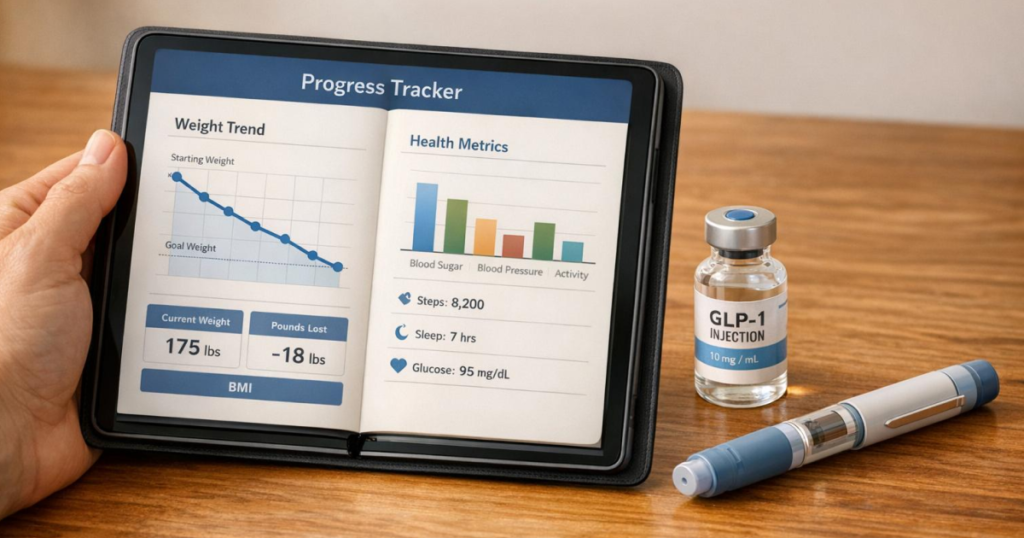
YourPep was built around the exact problem this guide addresses: keeping GLP-1 dosing consistent without relying on memory or scattered notes. Here’s what the app currently offers, including a few features that just shipped.
Schedule your dose day and time. Set your injection day and time once, and the app handles the reminders — no more mental math about “was it Tuesday or Wednesday this week?”
Log daily doses, mood, and side effects. Every entry builds a timeline you and your provider can actually use, instead of trying to recall three weeks of symptoms from memory during a five-minute appointment.
Pick symptoms to track. Rather than a generic side effect checklist, you choose what’s relevant to you — whether that’s nausea, fatigue, or injection site irritation — so your log stays focused and useful.
Track progress and share reports. Instead of exporting spreadsheets or retyping notes before appointments, the app generates a report you can share directly with your provider.
New: Meal tracker. Since GLP-1 therapy changes appetite and how your body responds to food, the app now includes a meal tracker so you can log what you’re eating alongside your dosing schedule — useful for spotting patterns between meals, side effects, and dose timing.
New: Water tracker. Hydration affects how some people tolerate GLP-1 side effects like nausea and constipation. The newly added water tracker lets you log intake right next to your dose log, so hydration habits and symptom patterns are easier to connect.
Coming next week: My Goals. A dedicated goals feature is rolling out soon, letting you set and track targets for weight, appetite, and energy levels — turning the app from a dosing log into a fuller picture of how treatment is affecting your day-to-day life.
The app is available for download on both iOS and Android, so your schedule, logs, and reports stay with you regardless of which device you’re using.
GLP-1 Dosing Schedules Vary by Medication
Part of why tracking matters so much is that GLP-1 dosing schedules aren’t uniform. The category covers several medications, and each one follows its own rhythm:
Weekly injectables are the most common format for GLP-1 therapy. A single injection covers a full seven-day cycle, which sounds simple but actually makes tracking more important, not less — a schedule slip of even one or two days shifts every future dose date if you’re not logging the actual date taken versus the “planned” date.
Dose titration schedules add another layer. Most providers start patients on a lower dose and increase it every four weeks, based on tolerance. Without a log, it’s easy to lose track of which dose level you’re currently on, especially if a dose increase gets delayed due to side effects.
Daily formulations exist for some GLP-1 medications and require a different tracking rhythm entirely — same time each day, rather than a weekly reminder. Mixing up a daily and weekly mental model is a common source of missed or doubled doses for people who’ve been on more than one type of GLP-1 medication.
Because the specific schedule depends on the medication, dose, and your provider’s plan, a tracker that lets you set a custom schedule — rather than assuming every GLP-1 user is on the same weekly cycle — is significantly more useful than a generic reminder app.
Building a Dosage Tracking Routine That Sticks
A tracking tool only works if it becomes a habit. A few practical ways to make that happen:
- Anchor the reminder to something you already do, like a weekly grocery run or a recurring meeting, so the injection reminder isn’t competing with a dozen other notifications.
- Log the dose immediately after taking it, not “later” — a two-minute delay is often how entries get skipped entirely.
- Review your log before appointments, not during them, so you walk in with questions already prepared instead of trying to reconstruct the last month on the spot.
- Rotate injection sites deliberately and note which one you used each time, rather than trying to remember by feel.
- Set a backup reminder for a few hours after your primary one, in case the first alert gets missed during a busy day.
What to Expect When You Start Tracking
Once you have a consistent tracking system in place, most people notice a few things within the first few weeks. Side effects like mild nausea or digestive changes tend to lessen over time, and having a log makes it much easier to see that trend instead of judging each day in isolation. It also becomes clearer whether symptoms are tied to a specific dose increase or something unrelated, like a change in diet.
It’s worth remembering that GLP-1 therapy is a supportive tool, not a shortcut. Pairing consistent dosing with healthy habits — balanced meals, adequate hydration, regular movement — tends to produce better outcomes than the medication alone. Tracking doesn’t replace those habits, but it does make it far easier to see how they’re working together.
Always follow your provider’s specific guidance on dosing and adjustments. A tracking app supports that guidance by giving you and your provider better information, not by replacing medical advice.
Frequently Asked Questions
How often should I log my GLP-1 dose?
Log each dose immediately after taking it, right down to the day, time, and injection site. Logging in real time is far more accurate than trying to recall doses at the end of the week, and it gives your provider a reliable record to review at appointments.
What happens if I miss a GLP-1 dose?
The right response depends on how close you are to your next scheduled dose and the specific medication, so this should always be confirmed with your provider. A dosage tracker helps by clearly showing when the last dose was taken, which makes it easier to have that conversation accurately.
Can I track GLP-1 side effects and doses in the same app?
Yes, and it’s one of the most useful things a combined tracker does. Seeing side effects logged alongside dose timing makes it much easier to spot patterns — for example, whether nausea tends to show up one or two days after a dose increase.
Is a GLP-1 tracking app better than a paper log?
For most people, yes. A tracking app travels with you, sends reminders automatically, and keeps side effects, meals, hydration, and doses in one connected timeline — something a paper calendar or sticky note can’t do on its own.
Does injection site rotation actually matter?
Yes. Rotating between areas like the abdomen, thigh, and upper arm helps prevent irritation and tissue changes at the injection site over time. Logging which site you used each time makes rotation far easier to stay consistent with.
Key Takeaways
Tracking your GLP-1 dosage schedule isn’t extra work layered on top of treatment — it’s part of what makes the treatment effective. A consistent log helps you catch patterns in side effects, stay accurate about timing, and walk into provider appointments with real data instead of guesses.
If you’re currently relying on memory or a sticky note, that’s the first thing worth changing. Set a schedule, log every dose as you take it, and pair that habit with a tool built for GLP-1 tracking specifically — like YourPep’s meal tracker, water tracker, and dose logging — rather than a generic calendar app. Download YourPep on iOS or Android to get your dosing schedule, symptom log, and progress reports in one place, with a new goal-tracking feature launching next week to round out the picture even further.